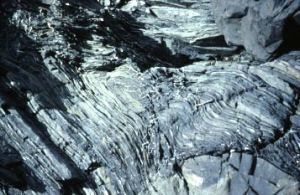
Two major junctions within Scotland’s crustal foundations occur within the area and are associated with the closure of the Caledonian Orogeny and the closure of the Iapetus Ocean. In the south, running in a NE-SW direction under the Solway and border area of Scotland and England, there is the ‘Iapetus Suture’, which marks the zone of closure of the ancient ocean. Across the top parts of the region, running in a similar NE-SW direction, there is the Southern Uplands Fault, which marks the northern limit of the Southern Uplands and its contact with the Midland Valley.
Carboniferous sedimentary rocks of the Midland Valley, and separate English basins, overlap onto the Southern Uplands. Permian-age (250 million year old) desert deposits occur in basin within the Region around Dumfries and Lochmaben.
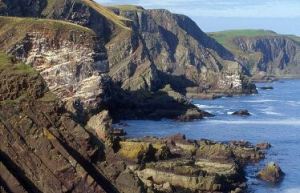
The area is notable for its glacial deposits, particularly drumlins, and for its coastal landforms, particularly salt marshes, sand flats and mudflats.
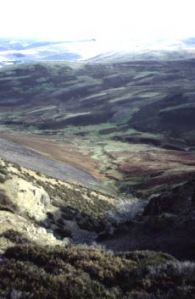
The landscape of this area reflects the underlying geology, with the whole area having been modified by the effects of glacial erosion and deposition during the Ice Age. Glacial erosion shaped the main valleys and moulded the western uplands which are extensively ice-scoured. The valleys have been deepened and the hills moulded by the passage of the ice. Particularly striking examples of glacial streamlining are represented along the margins of the Tweed valley.